Smikie Beauty
YOSHiMURA Matcha Shaker: 11 Seconds, Cold Water, and Which Colour to Pick
Matcha shaker vs whisk: what you are actually choosing between
A bamboo chasen is a beautiful object that most people use twice and then leave in a drawer, because it needs a bowl, a warm rinse, a specific wrist motion and somewhere to dry where the tines keep their shape. A shaker asks for none of that. YOSHiMURA's version is a small Japanese-made bottle with a wing-shaped mixing structure inside, and the maker's instructions are specific enough to quote: about 20 ml of water, one 2 g serving of matcha, then roughly eleven seconds of shaking up and down. That is the whole method. The company describes the result as finishing smooth, as if it had been whisked with a chasen. What people then get stuck on is not whether to buy one, but which of the eight colours to buy, so this guide covers both.
The short answer, and the one condition
Buy the colour you will leave on the counter, because that is what decides whether you use it. If you want it to disappear into a dark kitchen, take Jet Black; if you want it to look like the lacquerware it is finished to resemble, take Antique Vermilion; if it is a gift, take Cherry Blossom Pink. There is one condition on all of this, and it is the single most important line in this article: the maker specifies room-temperature or colder water only. This is a cold-water tool for making a matcha concentrate that you then top with hot water or milk, not a kettle-to-shaker device. If you wanted something you can pour boiling water into and shake, this is not that product, whatever colour you pick, and it is better to know that now than after the box arrives.
What the maker publishes
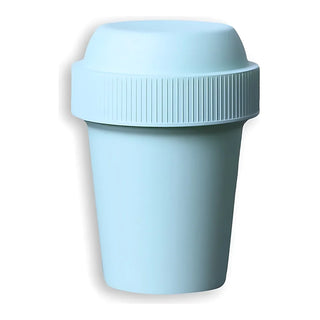
The specifications are short and worth reading before you buy. YOSHiMURA lists the cap and body as ABS resin with a Kaga Yamanaka-nuri urethane coating, which means the finish is in the Yamanaka lacquerware tradition of Ishikawa rather than natural urushi lacquer, and the company says the final stage is hand-finished by artisans one piece at a time. It measures 57 by 57 by 81 mm and is made in Japan. It is listed as not dishwasher safe and not microwave safe, and for use with water at room temperature or below. The colours were chosen from what the company calls the more than one thousand traditional Japanese colours, and the shade names follow that tradition rather than a Western palette, which is why a couple of them will not match any paint chart you know.
| Colour | Reads as | Pick it if |
|---|---|---|
| Jet Black | Classic lacquer black | You want it to vanish into the kitchen |
| Antique Vermilion | Traditional lacquerware red | You want it to look Japanese on the shelf |
| Deep Forest Green | Dark, matcha-toned | You want it to match what is inside |
| Cherry Blossom Pink | Soft, pale pink | It is a present |
| Indigo White | Pale, cool, modern | Your kitchen is white or steel |
| Fresh Leaf Green | Bright spring green | You want the brightest of the greens |
| Yamabuki Yellow | Warm golden yellow | You want it easy to find in a bag |
| Pink | Stronger, warmer pink | You want colour without pastel |
Jet Black
Black is the safest choice in the range and the one we would pick for a household that has not agreed on anything else. It is the closest of the eight to what most people picture when they hear Japanese lacquerware, and on a counter it reads as a small dark object rather than as a gadget, which matters if your kitchen is otherwise tidy. It is also the most forgiving colour for a tool that gets matcha powder on the outside of it, since a green fingerprint shows on pale shades and disappears on this one. If you are buying a shaker to use every morning rather than to photograph, this is the one that will still look right in a year, and the one least likely to date if your kitchen changes around it.
Best for: daily use, and kitchens where nothing should stand out.
[[product:yoshimura-matcha-shaker-jet-black]]
Antique Vermilion
Vermilion is the shade that carries the most history here. Red and black are the pairing that Japanese lacquerware has used for centuries, and this is the one that makes the Yamanaka-nuri reference on the label legible to someone who does not know the tradition. It is a deeper, dustier red than a Western scarlet, which is what the antique in the name is pointing at. Practically, it is the colour to choose if the shaker is going to sit out as an object as much as a tool, or if you are buying it alongside a matcha bowl and want the two to read as a set rather than as a kitchen appliance and an ornament. It is the shade that most rewards being left where people can see it rather than stored in a cupboard between uses.
Best for: leaving out on display, and pairing with a matcha bowl.
[[product:yoshimura-matcha-shaker-antique-vermilion]]
Deep Forest Green
Matching the tool to the tea is the obvious move and it works better than it sounds. Deep Forest Green is the darker of the two greens in the range, closer to a fired-clay glaze than to a bright powder colour, and it hides the inevitable smear of matcha on the outside better than the paler shades do. It is the colour to pick if you want the shaker to look like it belongs with tea specifically rather than with coffee equipment or protein bottles, which is a real distinction on a shared kitchen counter. It is also the easiest of the greens to give as a gift, because it is the one least likely to clash with whatever is already on the recipient's counter, which is the usual risk with a coloured object.
Best for: matching the tool to the tea, and gifts you are unsure about.
[[product:yoshimura-matcha-shaker-deep-forest-green]]
Cherry Blossom Pink
This is the gift colour, and it is worth being clear about why. Sakura pink is the shade that reads as Japanese to an American recipient without needing any explanation, which is exactly what you want when the present has to make sense the moment it comes out of the box. It is a pale, soft pink rather than a bright one, so it sits closer to the traditional palette the range is drawn from than to a novelty colour. The trade-off is practical: pale shades show matcha powder more than dark ones, so it suits someone who will wipe it after use, which most people receiving a gift like this will do anyway. If the recipient is not that person, the black or the deep green is the safer present to send instead.
Best for: presents, and anyone who wants the softest shade in the range.
[[product:yoshimura-matcha-shaker-cherry-blossom-pink]]
Indigo White
Indigo White is the modern one, and the choice for a kitchen that is already white, steel and glass. Where the black and the vermilion lean into the lacquer tradition, this shade lets the shaker read as a piece of contemporary Japanese design instead, which suits people who are buying it as an everyday object rather than as a cultural souvenir. It is also the easiest of the eight to photograph, if that matters to you, because a pale body does not swallow the green of the matcha. Like the pink, it will show powder more readily than the dark shades, so it rewards a household that rinses things straight after using them rather than leaving them until the evening. That is the only real trade-off worth naming with the pale shades in this range.
Best for: white or minimal kitchens, and photographing what you make.
[[product:yoshimura-matcha-shaker-indigo-white]]
Who should skip this
The cold-water rule rules it out for some people entirely. YOSHiMURA specifies water at room temperature or below, so if your matcha habit is hot water straight into the vessel you drink from, a shaker is the wrong shape of tool and a chasen and bowl will serve you better. It is also not dishwasher safe and not microwave safe, which means it needs washing by hand and a separate vessel for anything hot. And the finish is a urethane coating in the Yamanaka-nuri style rather than natural urushi, so if you are specifically shopping for traditional lacquerware as a craft object, this is a Japanese-made design piece finished in that style rather than that. None of this makes it a worse tool, but it does make it the wrong purchase for a collector.
Your next step
Pick the colour on the same logic you would use for a kettle: choose the one that looks right where it will live, because that is what makes you reach for it. Black and Deep Forest Green are the two that hide powder best, Antique Vermilion is the one that looks most like lacquerware, and Cherry Blossom Pink is the one to buy when it is a present. Then plan the drink rather than the tool: you are making a concentrate with cold water, so have the hot water, milk or ice ready in the cup before you shake. If you have not bought matcha yet, our YOSHiMURA matcha kit guide covers what to put in it, and our Japanese green juice picks cover the other green drink people ask about when they start buying Japanese tea.
FAQ
How long do you shake a YOSHiMURA matcha shaker?
About eleven seconds. YOSHiMURA's instructions are roughly 20 ml of water and one 2 g serving of matcha, shaken up and down for around eleven seconds.
Can you use hot water in it?
No. YOSHiMURA specifies water at room temperature or below. Make the concentrate cold, then add hot water, milk or ice in your cup.
Is it dishwasher safe?
No. The maker lists it as not dishwasher safe and not microwave safe, so wash it by hand.
Is a matcha shaker as good as a whisk?
YOSHiMURA states the result finishes smooth, as if whisked with a chasen. What a shaker changes is the technique and the cleanup, not the tea.
Is it real lacquer?
The body and cap are ABS resin with a Kaga Yamanaka-nuri urethane coating, finished by hand in Japan. It is in the Yamanaka lacquerware tradition rather than natural urushi.
How big is it?
57 by 57 by 81 mm, which is small enough to travel in a bag and to live on a counter without taking a shelf.


SHOP THE ARTICLE